


Buyer's Guide: Waterfront
Waterfront Buying 101: What to Know Before You Buy on Newport Harbor
Newport Harbor waterfront homes come with details that inland properties don’t: dock and pier permits, bulkhead maintenance, flood insurance, and sometimes a private community association. None of it should scare off a serious buyer, but each item affects your closing timeline, your carrying costs, and what you can and can’t do with the water frontage once you own the home.
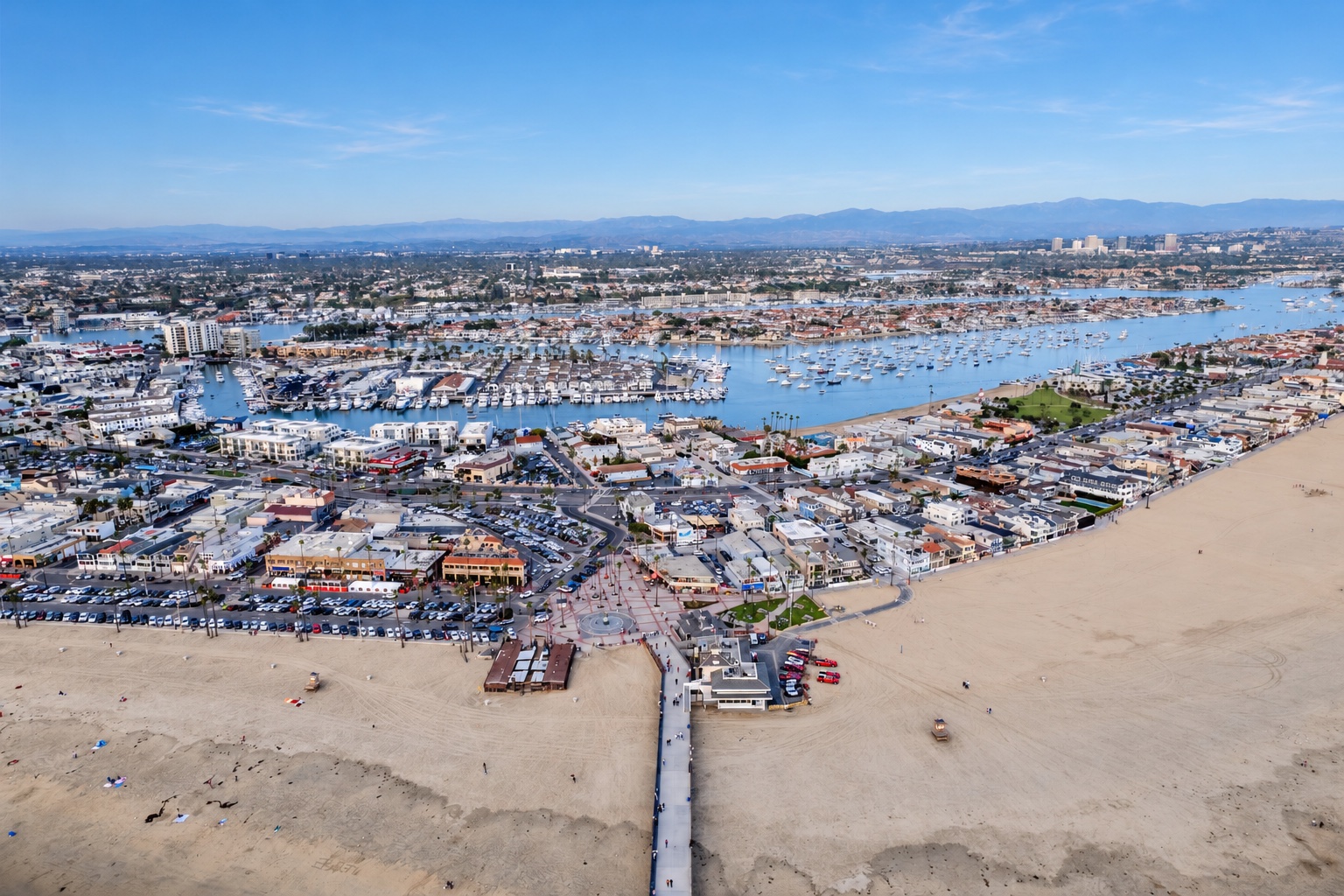

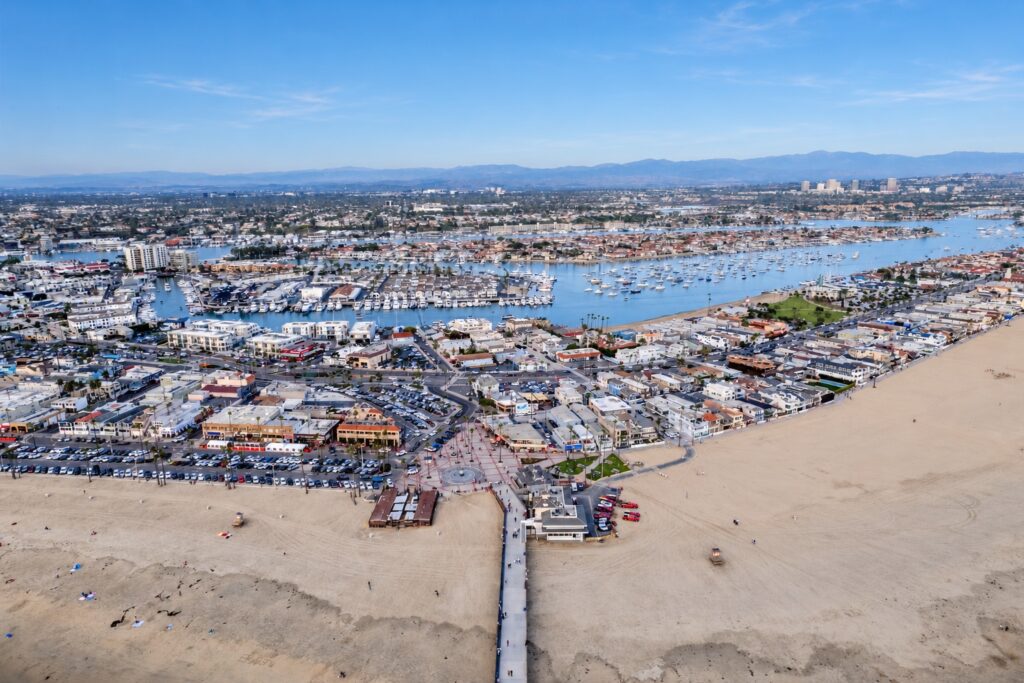
Newport Harbor waterfront property involves permits and maintenance responsibilities that inland homes don’t. Photo: wirestock / Envato. Sky retouched.
Key takeaways
- “Waterfront” in Newport Beach can mean bayfront on Newport Harbor, oceanfront on the Balboa Peninsula, or a bay-view lot without direct water access — each carries different rights and restrictions.
- Dock and pier permits are issued and administered by the City of Newport Beach Public Works Department; they generally transfer with the property at sale, but the transfer requires a formal application signed by both buyer and seller at close of escrow, plus a City safety inspection.
- Homes in a FEMA-designated Special Flood Hazard Area typically require flood insurance as a condition of any mortgage from a federally regulated lender — get a flood zone determination and an insurance quote early, not during your contingency period.
- Bulkheads and seawalls are generally the property owner’s maintenance responsibility, and repairs often require a City encroachment permit; ask about the age and condition of the bulkhead before removing contingencies.
- Some harbor-front enclaves, including gated communities on man-made islands, operate through a private homeowners association with its own dues, rules, and sometimes its own dock or pier program — this is separate from the City permit.
What “waterfront” actually means here
Newport Beach buyers use “waterfront” loosely, but it covers a few genuinely different situations. Bayfront homes sit directly on Newport Harbor, in neighborhoods such as Balboa Island, Lido Isle, Balboa Peninsula’s bay side, Harbor Island and Linda Isle, and typically have a bulkhead and often a private dock. Oceanfront homes face the open ocean along the Balboa Peninsula or West Newport, with different erosion, sand replenishment and public-access considerations than harbor property. Bay-view or ocean-view homes may sit a street or two back with no direct water access at all. Before you tour a listing described as “waterfront,” ask specifically whether the parcel includes water frontage, an existing dock permit, and deeded or exclusive-use rights to the area in front of the bulkhead — the marketing term alone doesn’t answer any of that.
Dock and pier permits: what transfers, and what doesn't
Private docks, piers and floats on Newport Harbor sit on public tidelands, so they operate under a permit from the City of Newport Beach Public Works Department rather than outright ownership of the water frontage. The City’s own guidance for owners describes a transfer process, not an automatic handoff: the buyer and seller submit a completed application with both signatures due at close of escrow, along with a transfer fee, and the City states a typical turnaround of five to fifteen working days. Before finalizing the transfer, the City inspects the dock for safety compliance; if the inspection turns up deficiencies, the current permit holder generally needs to correct them and request a reinspection.
For a buyer, the practical implications are straightforward. Build the dock permit transfer into your escrow timeline rather than assuming it happens automatically at recording. Ask your agent or escrow officer to confirm the permit is in good standing and request any prior inspection history. And if a listing shows a dock but the seller can’t produce a valid, transferable City permit for it, treat that as a question to resolve during your contingency period, not after you own the home.
Flood zones and insurance
Federal law requires federally regulated or insured lenders to require flood insurance as a condition of a mortgage on a property located in a FEMA-designated Special Flood Hazard Area. Many Newport Harbor and oceanfront parcels fall inside these zones, though the exact boundary can vary block by block and even lot by lot. FEMA’s Flood Map Service Center lets you look up the current flood zone for a specific address, and it’s worth doing before you write an offer rather than after.
Flood insurance premiums depend on the flood zone, the elevation of the structure relative to the base flood elevation, and the coverage amount you choose, so a quote for one property doesn’t tell you much about the next one. If a home is in a mapped flood zone, ask your lender for a flood zone determination early and get a written quote from an insurance agent before your contingency period runs out, so the added carrying cost is part of your decision rather than a surprise at closing.
Bulkheads, seawalls and who maintains them
The bulkhead or seawall that separates a harbor-front lot from the water is generally the property owner’s responsibility to maintain, not the City’s. Because bulkheads sit partly on public tidelands, repair or replacement work commonly requires a City encroachment or building permit, and in some cases review by the California Coastal Commission or State Lands Commission depending on the scope of work. Bulkhead condition is not always obvious from a normal showing — cracking, leaning, or rebar exposure can be easier to spot at low tide than at high tide.
Ask the seller or listing agent for the age of the bulkhead and any past repair permits, and consider having a qualified marine or structural inspector look at it specifically, in addition to your general home inspector, before you remove contingencies on a bayfront purchase.
Private associations on the harbor
Several of Newport Harbor’s most sought-after waterfront enclaves are private communities with their own homeowners association, gate, and rules on top of standard City requirements — this is separate from, and in addition to, the City dock permit process described above. Depending on the community, the association may set its own architectural guidelines, common-area dues, and occasionally its own dock or slip program for shared facilities. Ask for the association’s CC&Rs, current budget, and any pending special assessments as part of your due diligence, the same way you would for a condo or planned community.
A waterfront closing checklist
A few items are worth confirming before you remove contingencies on a Newport Harbor waterfront purchase:
Confirm the dock permit
Verify a valid, transferable City pier permit exists and start the buyer/seller transfer application well before your close of escrow date.
Get a flood zone determination
Look up the FEMA flood zone for the specific address and get a written insurance quote before your contingency period ends.
Inspect the bulkhead separately
Ask about its age and repair history, and consider a marine or structural inspection in addition to a general home inspection.
Review any association documents
If the community has an HOA, request CC&Rs, current dues, meeting minutes, and any pending special assessments.
Georgina’s perspective
In my experience around Newport Harbor, buyers make stronger decisions when the view and lifestyle are evaluated alongside permits, dock rights, bulkhead condition, flood exposure, and insurance.
Perspective informed by Georgina’s documented coastal Orange County experience; see also City of Newport Beach Harbor Department.
Frequently asked questions
Does every Newport Harbor home come with its own private dock?
No. Some bayfront homes have a dock covered by a City pier permit, some share access, and some waterfront-adjacent homes have no dock at all. Confirm the specific permit status for any listing rather than assuming from photos or marketing copy.
Is flood insurance always required to buy on the harbor?
It’s required by federally regulated lenders when the property sits in a FEMA-designated Special Flood Hazard Area and the loan is federally backed or the lender is federally regulated. Cash buyers aren’t legally required to carry it, though many choose to given the location.
What's the real difference between bayfront and oceanfront in Newport Beach?
Bayfront homes sit on Newport Harbor, generally calmer water, with dock potential and bulkhead maintenance considerations. Oceanfront homes face the open ocean, with different erosion, sand and public beach access dynamics, and typically no dock.
Can I rebuild or add a dock after buying?
Sometimes, but any new construction or significant modification to a pier or dock requires its own permitting process through the City, and potentially other agencies. Ask about feasibility before assuming a project is straightforward.
Are gated harbor communities different from the rest of Newport Beach?
Some are governed by a private homeowners association in addition to standard City requirements, with their own dues, architectural rules, and sometimes shared dock facilities. Review the association’s governing documents as part of your due diligence.
Research and useful resources
About Georgina Jacobson
Georgina Jacobson is a Coldwell Banker Global Luxury Property Specialist and the founder of the Georgina Jacobson Group. With more than three decades of experience and over $1 billion in closed transactions, she represents buyers and sellers throughout Newport Beach, Newport Coast, Corona del Mar, Laguna Beach and coastal Orange County. Phone: 949-285-8380 · California DRE #01176109.
Considering a waterfront purchase on Newport Harbor?
I can walk you through dock permit status, flood zone considerations, and association details for any specific harbor-front listing before you write an offer.
Sources: City of Newport Beach, Public Works Department, “Harbor Dock & Pier Permits.” Federal Emergency Management Agency (FEMA), National Flood Insurance Program guidance for federally regulated lending. This article is intended for general informational purposes and is not legal, insurance or engineering advice. Confirm dock permit status, flood zone determination and bulkhead condition directly with the City of Newport Beach, a licensed insurance agent, and a qualified inspector.